Most business owners don't realize they need HR until something starts breaking.
An employee resigns unexpectedly.
A manager struggles to hold someone accountable.
Workplace conflict begins affecting productivity.
Turnover increases.
Communication becomes inconsistent.
By that point, the issue is rarely HR itself. The issue is that the business has outgrown the people practices that once worked when the organization was smaller.
Many leaders view HR as something needed after a company reaches a certain size. In reality, effective HR is not determined by headcount. It is determined by complexity.
As businesses grow, people challenges become business challenges.
The Common Misconception About HR
When many people think about HR, they think about paperwork, onboarding forms, policies, and compliance requirements.
While those elements are important, they represent only a small portion of what effective HR should provide.
At its core, HR helps organizations create the structure, consistency, and leadership support necessary to manage people effectively.
The earlier that foundation is established, the easier it becomes to scale operations, develop leaders, and maintain a healthy workplace culture.
Early Warning Signs That a Business Has Outgrown Its Current Approach
Many organizations begin experiencing signs that they need HR support long before they recognize it.
Some common indicators include:
Managers handling employee issues differently from one another
Performance concerns going unaddressed
Increased employee turnover
Workplace conflict consuming leadership time
Lack of clear expectations and accountability
Inconsistent hiring and onboarding practices
Founders or business owners becoming the default problem-solvers for employee issues
Growing uncertainty about compliance obligations
These challenges are often viewed as isolated incidents. In reality, they are frequently symptoms of a business that has outgrown informal people management practices.
The Cost of Waiting
When HR is viewed only as a response to problems, organizations often spend more time and energy reacting than planning.
Leaders become distracted by employee issues.
Managers receive little support in handling difficult conversations.
High performers become frustrated by inconsistency.
Workplace culture begins to develop by default rather than by design.
Over time, these challenges can impact engagement, productivity, retention, and organizational performance.
The cost is rarely measured solely in dollars. It is measured in lost time, missed opportunities, leadership frustration, and avoidable disruption.
What Proactive HR Looks Like
Proactive HR is not about creating bureaucracy.
It is about creating clarity.
It provides leaders with the tools, guidance, and structure needed to make better people decisions.
This may include:
Clear expectations and accountability practices
Consistent hiring and onboarding processes
Leadership development and manager support
Employee relations guidance
Performance management frameworks
Workplace communication strategies
Scalable people processes that support growth
These elements help organizations address challenges before they become larger issues.
Building for the Future
Every organization starts somewhere.
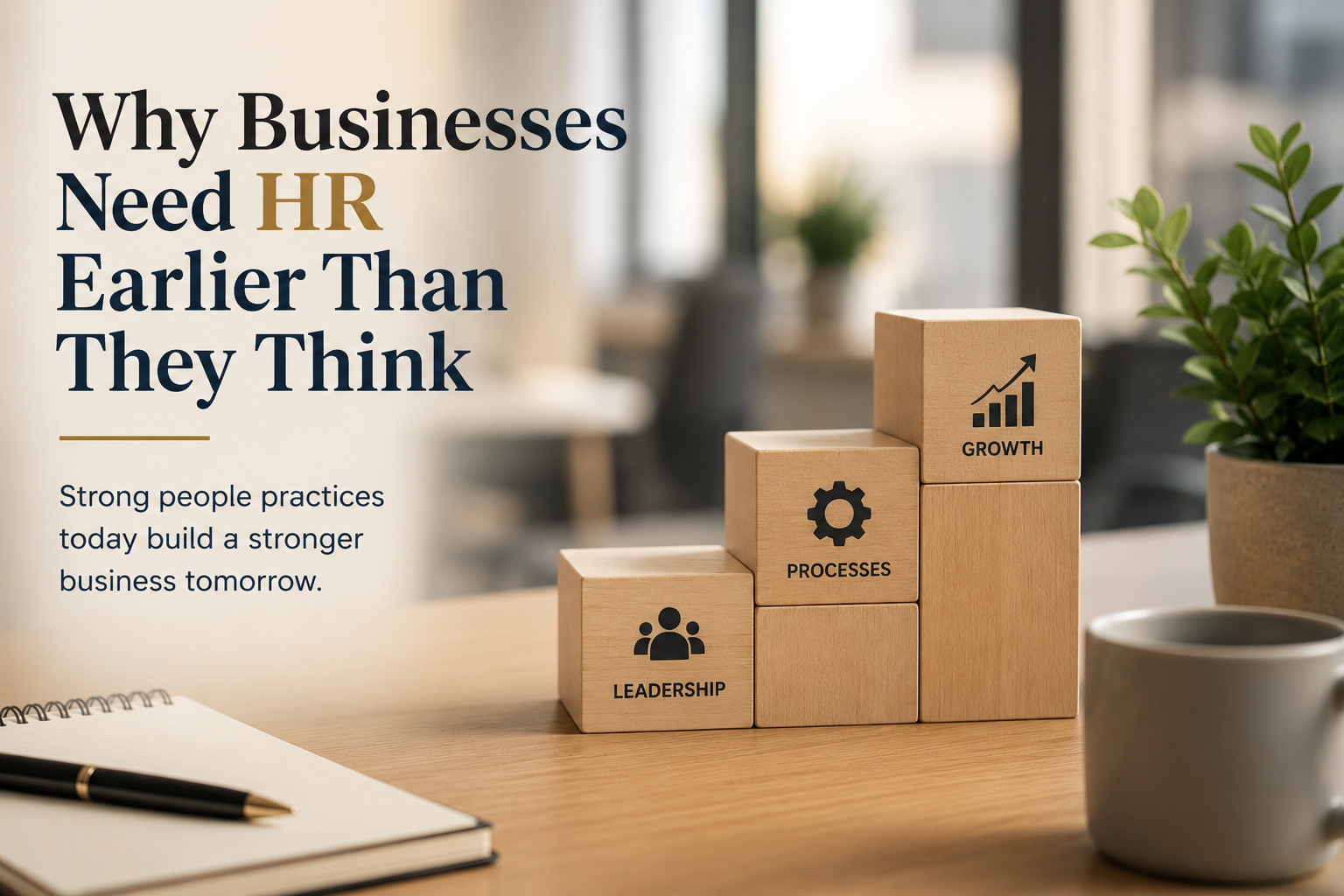
Whether you are launching a new business, growing a small team, or leading an established organization, people practices eventually become part of your business infrastructure.
The most successful organizations do not wait for workplace challenges to force change. They build the foundation early, develop leaders intentionally, and create systems that support both people and performance.
HR should not be viewed as a reaction to problems.
It should be viewed as an investment in sustainable growth.
Because by the time workplace challenges become visible, the business often needed HR support months or even years earlier.
About AskHR
AskHR partners with businesses at every stage of growth, providing practical HR expertise, leadership support, employee relations guidance, and strategic people solutions that help organizations build stronger workplaces and achieve long-term success.